
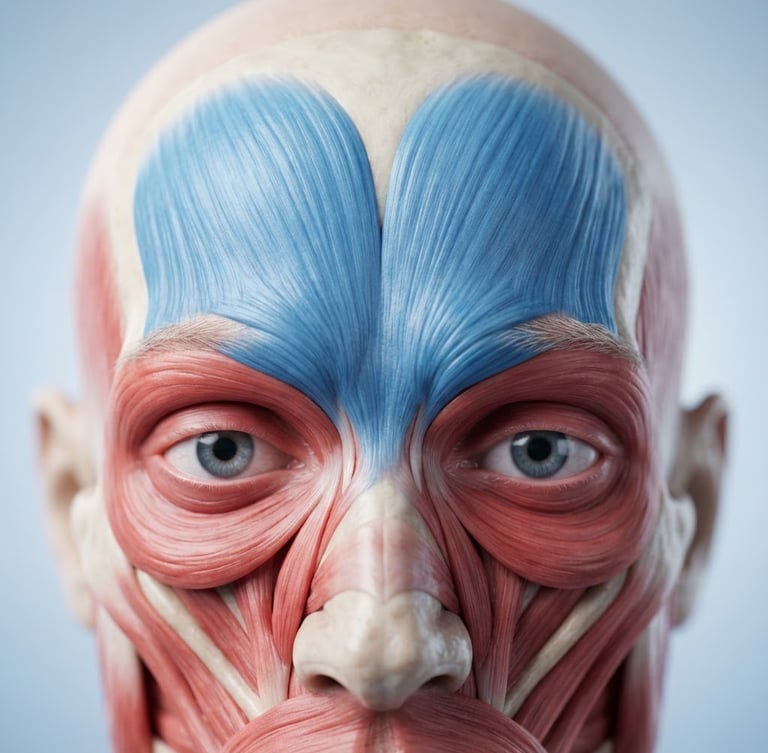
Facial Neuromodulation Targets
Explore facial anatomy through evidence-based insights into muscle function, anatomical relationships, and clinical relevance. Designed to support a clearer understanding of facial structures and their role in clinical practice.




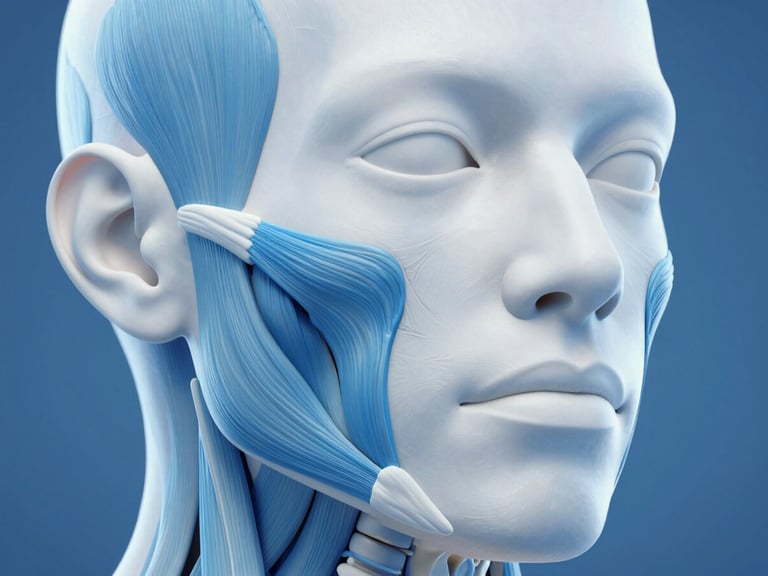
Key Facial Muscles for Injection
Frontalis Muscle
Responsible for forehead lines. Precise injection avoids brow ptosis. Understanding its fiber orientation is crucial for natural, balanced results. Clinical evidence supports specific dose ranges for optimal efficacy and safety.
Corrugator Supercilii
The primary muscle for glabellar frown lines. Targeting this muscle requires careful consideration of its depth and proximity to vessels. Accurate placement minimizes diffusion and enhances patient satisfaction.
Masseter Muscle
Influences jawline contouring and bruxism treatment. Injection depth and volume are critical to avoid salivary gland involvement or smile asymmetry. Evidence-based protocols guide safe and effective treatment.
Identifying Anatomical Danger Zones
Meticulous anatomical knowledge is paramount to prevent adverse events. This section details critical areas to avoid, including major nerves and blood vessels, ensuring patient safety and optimal outcomes for Botulinum Toxin procedures.
• COMPLETE SITE INDEX
BotoxWiki Reference Sitemap
Access all clinical evidence methodologies, facial anatomy maps, brand comparison data, and editorial standards currently published across the BotoxWiki platform.
Clinical & Anatomy
Evidence & Review
Editorial & Trust
Reference Standard
BotoxWiki provides evidence-based content, medical review, and a neutral editorial approach to botulinum toxin formulations and anatomical guidance.
© BotoxWiki Clinical Reference Directory.
All anatomical models, literature reviews, and evidence summaries are strictly peer-reviewed and non-commercial.